Wednesday, 27 April 2011

Rolling rocks

Iain is usually charming and friendly, and has a good joke to tell about his time managing a pub. But not today.
He’s come to see me in my morning surgery, with a lot on his mind. His feet are playing up again. Then it’s ‘some funny do’s I’ve been having, you know like blackouts or something’: three or four of them in the past month
When I ask him to tell me more, he says (with a sheepish smile), ‘Well, I guess I’ve been drinking too much again’.  Indeed he has. Without much prompting he tells me he’s getting through at least half a litre of vodka a day, and doing so mostly on his own at home. And he is smoking more than 50 cigarettes a day. I know Iain has other medical problems. He has diabetes mellitus, which (unsurprisingly) is not well controlled, and high blood pressure. He retired five years ago. His three children are all now grown up and living away from home. 
Using my best consultation skills, I ask Iain to tell me more about his worries and concerns. He has a long list. Apart from his ‘blackouts’ and binge drinking, he reminds me about his painful feet. His teeth hurt a lot.  He is sleeping badly and is often irritable. He has little interest in ordinary things, such as watching television or reading. He rarely goes out of his house, partly due to the pain of walking. And he is distressed because he can no longer be bothered to see his children.
He leans forward and says, ‘You see doc, basically the problem for me is I just can’t see any point in getting up in the morning any more’. 
He talks about his loss of ability, his painful feet and the complications of his diabetes, both present and to come. He talks about his loss of purpose, how he used to be a successful pub manager and a caring father. But now he has no role, with either work or family. His life is futile, a relentless trudge through pain and disability. All he can see is a slow, inevitable path towards death.
Iain’s problems seem to me to be beyond the reach of medicine, and way beyond the relevance of any possible formal diagnosis.
Iain and I are facing a profound, existential question.  What, actually, is the point in his being alive? 
I find myself thinking about Sisyphus, condemned by the Gods to spend eternity rolling a huge rock up a mountain, only to see it fall down again as soon as he’s reached the top.  And then about Bruce Springsteen’s exhausted night shift worker:
I get up in the evening and I ain't got nothing to say. I come home in the morning, I go to bed feeling the same way. I ain't nothing but tired. Man, I'm just tired and bored with myself’.

In my next post, I’ll tell you how our conversation went on.  Meanwhile, I’d love to know how you’d respond to Iain.  Maybe you’ve been there yourself, or maybe you know other people who just can’t see any point in it all. What would you say, or do?  
Over to you, dear reader......

Friday, 15 April 2011

Memories

My friend Odd Steffen died a few days ago.  It was a shock. He was wise and solid. I’d expected him to always be there.
I’ve been remembering all the good times we spent together.  A big research conference in Birmingham: his plane was late, we were all panicking. Then he strolled in, calm as you like, just in time to deliver his presentation. Dinner in a Blues bar in Chicago. And a weekend in Ville’s woodland retreat on the south-west coast of Finland.  It was June, daylight lasted for ever. Sunshine, sauna, swimming, Sibelius, sailing.
A magical time.
Memories matter. When life is difficult or sad, we can draw on memories of good times. They help us to get through the troubled present, and nourish the hope that good times will return.  
Memories do more than that. They give us an awareness of continuity. They build our sense of coherence, our identity, our ideas about who we are and where we belong.   
Proust was a delicate creature, who spent most of his adult life in sealed room in Paris, in a state of severe health anxiety. He was also a wonderful writer. He has important things to say about memory and continuity. Tiny, apparently insignificant events – a cake crumbled into a cup of tea, catching sight of a church tower, the smell of mildew – can be triggers that recall lost times, bringing them together with the present in a continuous reality.  
Memories keep us connected with our past, with where we have come from in this unique life we are leading. These connections help us survive and flourish, and build for the future.
‘That’s all very well’ I hear you say, ‘if you’ve got a store of good memories to fall back on. But what if my memories are mainly bad ones?’  
Sometimes memories can be cruel. The Russian writer Dostoevsky was haunted for years by the memory of the moment when he stood before the firing squad waiting his call for execution, before his reprieve was suddenly announced. Many people who suffer trauma in childhood find dark memories returning to haunt their lives and thoughts.  Or maybe your memories are of failures, unrealised dreams, of things that might have been.
Fortunately, memories are not fixed. We can change them.
We can turn memories into sources of energy and hope. We can draw new implications from old memories, or expand them by adding in the experiences of others.
In his Intimate History of Humanity, Theodore Zeldin tells of his friend Olga who used her fearful memories of life as a political dissident as a stimulus to change – given the opportunities provided by glasnost and perestroika – into a life as a commercial statistician. This gives her financial security and the freedom to dress well, travel frequently and indulge her passion for Proust.

And there is Quoyle in The Shipping News. His earliest memory is being a disappointment to his father, because he almost drowned when he was supposed to learn to doggy-paddle.  He grows up as a fat, lonely loser. But new experiences of friendship, creativity and love alter his awareness of the past. His memories expand, enriching his past and his imagined future.
He remembers how he saved a bird his daughter had found, and how thrilled she was.  
‘If a bird with a broken neck could fly away’, he wonders, ‘what else might be possible? It may be that love sometimes occurs without pain and misery.’
What about you? What memories keep you going through bad times? What helps you increase your supply of good memories?

Monday, 21 March 2011

Respect

Over to Sue for this blog, which is all about Respect.

“With respect” is one of those phrases I really dislike.  Usually it’s said when people are irritated and disagree with you, and respect is actually not very much on their agenda.  Nevertheless respect is a word we often hear bandied about.  There are comments like “No self respecting person would wear that,” we hear talk of “Respect needing to be earned”, of young people having “no respect”.   So are there in fact lots of different kinds of respect? 

As a child I wore a hat when I went to church as I was told it was respectful. I hadn’t a clue what it meant but I went along with it.  Most of my friends wore a hat as well so it made me one of the crowd. 


Later on as rebellious teenagers we joined together to show we didn’t respect things, certainly not things that “old" people thought important!   So no hats for us, unless we made them part of the outrageous fashions we felt were our own!


Here’s how I think about respect, and why I think it’s so important.

I was fortunate to grow up in an environment that taught me I was as good as, but no better than anyone else.  This was some intrinsic quality, not related to wealth, status, looks or any of the other parameters we measure ourselves by.

When we are born, to develop to our maximum potential, everyone deserves to be respected by, and to respect, everyone else.  And what a perfect world it would be if that continued to happen as we grew!! 

But none of us live in a perfect world, so how are we going to manage?

If we all deserve respect, but we feel disrespected by someone in, for example, a relationship or in work, what is actually happening?  Someone is not treating us right but should that actually affect our own self-respect?  No it shouldn’t - unless we allow it to.  Here are two wonderful comments confirming this. 

‘They cannot take away our self-respect if we do not give it to them.’  ~Mahatma Gandhi

‘No one can make you feel inferior without your consent.’
~ Eleanor Roosevelt

 If my self-respect is strong and someone treats me badly it’s not my fault  - it’s theirs.  It tells us more about the other person than it does about ourselves. We might feel angry or sad or even scared but that again is to do with the other persons actions. It is only when our self-respect is low we mistakenly blame ourselves.

We can think of our self-respect as a core of positive energy, a bright light that will always be there.  It might be weaker or stronger at different times in our lives, but it is always there.  And we need to feed it by being with positive people as much as we can.

We cannot always choose to be with people who treat us well . But sometimes we can remind such people that we don’t need to tolerate their behaviour. For example, if someone is shouting at you in what you believe to be an unreasonable manner you can say something like, “I do not like or deserve to be shouted at. If you want to speak to me let’s start again.”  It won’t always work – and if it doesn’t, we can tell ourselves we did our best and are obviously at a higher level of personal development than our attackers!


Little things can be very important measures of respect – greeting people with a handshake, smiling, anything that helps the other person feel valued. I was away at the weekend with my daughter and her partner and their 4 month old son.  He is their first child and I happily spent the weekend listening to them talking and singing to him, about how wonderful, funny and cute he is. He was surrounded by a cocoon of total acceptance for who he was.

Now that’s what I call respect!

Sunday, 20 February 2011

Under the Banyan Tree

Last week I visited Pakistan with a group of doctors from Liverpool. We were there to develop research links. I was also keen to find out how they run health care in rural areas.
Before we left I was very conscious of the troubled times people are living through, with political instability and natural disasters like last summer’s devastating floods in the Indus Valley. These were evident, but by no means oppressive, during our visit to Islamabad and Rawalpindi.
Much more in evidence were the strengths and resilience of the country, and the people we met. A rolling hilly landscape, dotted with stupas, temples and shrines arising from a rich, diverse cultural heritage much older than ours in the West. A brief but memorable meeting with Dr Tariq Mehmood. He’s a rural medic who works with few resources beyond his own knowledge and skills, yet provides the sort of patient-based care with which I feel great affinity. And wherever we went, generosity and hospitality beyond measure.

But I was most captivated by the Banyan Trees.  Most villages in the region have at least one. One village we passed has six Banyans grouped together.
Banyans are fig trees, which start life as seeds germinating in the crevices of other trees. Once established they can live for hundreds of years, sometimes more than a thousand. They are immense. Deep, deep roots come above the surface and provide natural (and remarkably comfortable) places to sit and rest. Branches spread outwards and upwards into the sky, seemingly forever, and their green leathery leaves offer shade from the baking sunshine.
Sitting under the Banyan Tree I feel at ease, secure, sheltered. I have a clear vision of the world around me. I also have an awareness of the immense strength and solidity of the tree, an undeniably tangible, peaceful, natural being who has seen it all before, and has survived and flourished. I imagine it offering its wisdom and protection to me, and whoever else wishes to rest under its care.
It doesn't surprise me that Buddha found enlightenment while meditating under the Banyan Tree, or that Krishna should choose a Banyan leaf as his final resting place. I can see why Shiva is commonly depicted as sitting in silence under the Banyan, with wise people at his feet. 
And I can see why Robinson Crusoe decided to make his home in one.
A Banyan Tree is a wonderful refuge in times of trouble.

Tuesday, 25 January 2011

Fresh Starts

I don’t usually do New Year resolutions, but this year I have started three new things.  And it feels good.
Fresh starts are any changes to our life that we see as helpful for us. They might be big or they might be small, it doesn’t matter too much. The main thing is that they are new, different to what we’ve been used to doing, and that we see them as constructive and positive. Fresh starts are particularly helpful if we’ve been feeling fed up or depressed. As Tirrill Harris (who’s written a lot about this) puts is, they ‘herald new hope – an indication that there might be a way forward’.
My three fresh starts are improving my Spanish, learning the piano and – best of all – wood chopping.

Hablo poquito espaňol
For years I’ve been promising myself that I’ll improve my Spanish, so that I don’t feel a complete idiot next time we’re in Granada, and I can put more than three words together without having to check in my dictionary.  Well now I’ve got started, thanks to an interactive website called LoMasTV. I can watch and listen to loads of music and conversations, really get my ears tuned to the way people speak, and then check whether I’ve understood what’s going on. And I can do it anywhere there’s internet access, so it’s great when I’m travelling.

When the saints go marching in
I’ve also been telling myself for ages that, one day, I will learn to play the piano again. That day has arrived. Sue’s bought me a DVD –based piano course for Christmas, produced by a guy called Will Barrow. It starts right at the very beginning, which is where I need to be.  I last had a piano lesson when I was 11, so I’m more than a bit rusty! And it’s friendly, simple and non-threatening – also very important for me.  So far I’ve learnt three chords and the basic tune of ‘When the saints go marching in’.  Just 15 more DVDs to go, but it’s a start. 
One day I will be able to play the aria from Bach’s Goldberg Variations. It’ll be a while yet before I get there, but it’s good to have an aim.

The joy of axe
We’ve recently installed a wood-burning stove in one of our living rooms.  Lots of warmth and a focal point for the room.  But most importantly for me, the perfect opportunity to show off my (previously unrecognised) lumberjack skills.  Our friends Vanessa and Ray have just bought me a magnificent axe. You can now find me at weekends swinging it merrily out in the back garden.
Believe me, there are few better things in life than splintering a log to smithereens with a couple of deft thwacks .....


Enough about me. What about you? Have you made any fresh starts recently? 
They might be small like mine, or they might be big ones – like a new relationship, a new job, or moving house.  Let us know what’s new and good for you.
Like we did with our well-being recipes a while back, maybe we can build up a store of fresh start events.

Friday, 24 December 2010

Ode to Joy

Today I’m thinking about joy.  Not just getting by or feeling OK. Not even just contentment or wellbeing. Joy.  The thoughts and feelings we have at those moments when life is excellent, when everything is fine and exactly as we would wish it to be.  

My thoughts of joy are sparked in part by Christmas; but even more by the birth of Frank, my latest grandchild; and by the recovery of my brother Steve from a major operation.

We doctors concentrate too much on curing sadness. We pay too little attention to the positive side of life. Helping people out of the depths of their misery is good, but not good enough. We leave people stranded half way. We try to help people reduce their pangs of grief and move out of range of their personal whirlwinds, without offering anywhere better to go.  Rarely do we encourage our patients to travel any further, to look around and discover places where they can smile and laugh, where life can be rewarding and inspirational.
Without the idea of joy, or a direction of travel towards positive emotions, we are operating with one hand tied behind our backs when we try to encourage patients to make better decisions, solve their problems and rearrange their social behaviours.

Barbara Fredrickson, a psychologist based in North Carolina, explains how we can use joy and other positive emotions to broaden and build our well-being and personal resilience. Joy sparks the urge to play. Interest sparks the urge to explore. Contentment sparks the urge to savour and integrate. And love sparks a recurring cycle of each of these urges within safe, close relationships. Broadening our minds in these ways, through play, exploring, savouring or integrating, promotes discovery of new and creative actions, ideas and social networks. These in turn build up our personal resources and provide lasting reserves which we can draw on if life gets difficult again.

We don’t just have to wait for joy to come along and surprise us. We can go looking for it.

Music is one big route into joy. For me Beethoven does joy in music better than anyone else I know. One of the very best moments of my life was being in a choir singing the Ode to Joy in his Choral Symphony.  Here is a link to another version (technically much better than ours!) http://www.youtube.com/watch?v=M-WF0PVi2FA

For sheer ebullient, effervescent joy, bubbling over with brilliance, I can think of nothing better.  This one is to celebrate the birth of my grandson Frank.

If I’m looking for quiet reflective joy, Ludwig van B helps me out again.  I love his Heileger Dankgesang, the third movement of his string quartet opus 132. He composed this after recovering from a very serious illness, when he wasn’t at all sure that he would make it. So this one is for my brother Steve.  

Have a look at http://lvbandmore.blogspot.com/2010/08/810-beethovens-heiliger-dankgesang-from.html.  You need to scroll down to find the music itself. This link also gives a delightful talk about illness and creativity.

Or if it’s bringing out the joy to be found in ordinary everyday living, for me there’s nothing to beat Van Morrison’s Coney Island . Here’s a link: www.youtube.com/watch?v=min5Wrw1eV4. Van M is famously grumpy, but sometimes, just sometimes, he gets it absolutely right.

What about you?  What brings you joy?  Does it catch you by surprise, or can you go and find it? How do you celebrate it?

Wednesday, 15 December 2010

Try a little tenderness

A lot of what I’ve written so far has been about balance – the balance between being with others and being alone; the balance between sorting out your own problems and reaching out for help.  Here’s another balance than works for me – the balance between looking after myself and looking after other people.
 It is entirely reasonable to wish to have a pleasant life, to seek to be happy and contented as much as possible. We all need to chill out, pamper ourselves, enjoy protected ‘me’ time. But it is also good for us to engage in purposeful activity, to devote time and effort to people or things other than ourselves.
I write ‘good for us to engage in purposeful activity’ deliberately. I don’t just mean that it is morally good, or the right thing to do.  I also mean that it is probably good for our health.

There is evidence that a combination of looking after self and looking after others helps us to stay healthy.  Carol Ryff is a very thoughtful psychologist from Wisconsin in the United States. She  is working on some elegant studies with older people to check out the relationship between different sorts of well-being and future health. She’s shown that increasing your personal well-being can improve your blood sugar levels, and that people who look after others are less likely to develop of diabetes.  Also that greater psychological well-being - including positive relations with others, environmental mastery, personal growth, purpose in life and self-acceptance – helps you sleep.

If you look back at the well-being recipes that we produced on this blog a few weeks ago, you’ll see that they all contain a combination of looking after self and looking after others. So, perhaps instinctively, we are aware of this need for balance between self and other.   

 What sorts of purposeful activity are good for us? 

The philosopher Alasdair MacIntyre argues that we should be involved in moral communities, using our skills to enrich our own lives and the lives of those around us. Martin Seligman (another US psychologist) distinguishes between the good life, which involves us in gratifying engagement outside ourselves, whether in work, love or play; and the meaningful life, in which we place ourselves in the service of something larger than ourselves. 
I’m not sure that it matters too much what we do, as long as we do something.  I’m a believer in starting simple, and close to home.

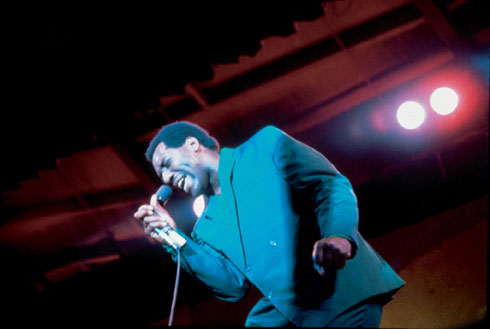
And we don’t always have to rely on the wisdom of philosophers and psychologists. As the incomparable Otis Redding puts it, we could just try a little tenderness:

Oh she may be weary
Young girls they do get weary
Wearing that same old  shabby dress
But when she gets weary
Try a little tenderness

I know she’s waiting
Just anticipating
Things that she’ll never, never, never possess
But while she’s there waiting
Try a little tenderness
This is strong on the page, but so much stronger on the stage. To get the full effect, go and click on www.youtube.com/watch?v=dael4sb42nI